Building Scalable Mobile Tools for Diabetes Care with DarioHealth

Introduction

About the product

Dario integrates comprehensive support across a wide range of common and connected health needs, from well-being to chronic condition management. The company provides advanced digital health solutions for diabetes management, improving musculoskeletal and behavioral health.

Client’s objectives

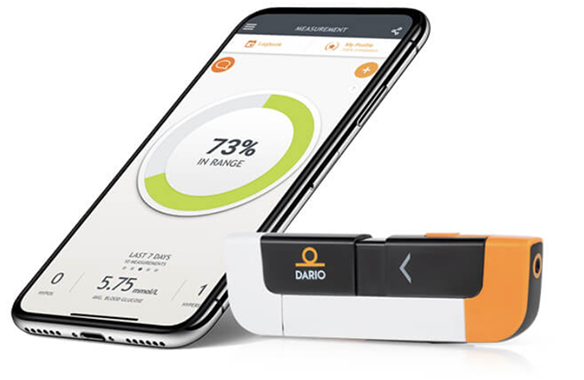
The client reached out to us with the request to develop a digital health platform to help people with diabetes monitor their blood glucose levels using a mobile-connected device and companion mobile applications. The ecosystem should have combined a dongle, measurement strips, and had user-friendly web and mobile apps to provide real-time tracking and insights.
Technical challenges

Cross-Platform Consistency

Delivering identical functionality, UX, and performance across native iOS, Android, and web applications while supporting multiple OS versions and screen sizes.

Scalability Under High Data Loads

Designing an architecture capable of handling over 13 billion real-world data points and supporting 1.3M+ registered users without performance degradation.

Data Privacy & Security

Implementing robust encryption, secure APis, and authentication mechanisms to protect patient health records while ensuring low-latency interactions.

Deep linking implementing

Implementation of deep linking to enable navigation and integration from external sources or notifications.

Regulatory Compliance

Meeting strict FDA, HIPAA, and GDPR requirements for handling sensitive health data, including encrypted transmission, secure storage, and role-based access. This demanded rigorous validation and documentation for regulatory audits.

Medical Device Integration

Ensuring stable, accurate, and real-time connectivity between the dongle (via Lightning/Headphone jack) and mobile apps on both iOS and Android. Any delay or data mismatch could directly impact patient care.

Delivery approach

1. Requirements Analysis

Collaborating closely with the client’s product and medical teams to define functional, compliance, and integration needs, ensuring all healthcare regulations were addressed from the start.

2. Proof of Concept

Building an MVP to validate the feasibility of device connectivity, data synchronization accuracy, and core compliance features before committing to full-scale development.

3. Scalable Architecture

Designing the scalable and fault-tolerant architecture, using patterns tailored for healthcare applications. Choosing appropriate technologies and tools for front-end, back-end, and data management.

4. Environment Setup

Establishing secure development, staging, and production environments with CI/CD pipelines (Jenkins, GitHub Actions, CircleCI) and automated/manual testing setups.

5. Core Modules Implementation

Delivering modules for glucose tracking, healthcare diary, device pairing, real-time notifications, deep linking, and remote action capabilities, ensuring smooth user workflows.

6. Application Development

Developing native iOS and Android applications using Swift and Jetpack Compose, alongside a responsive web app, implementing modular components for faster updates.

7. Data analvsis

Integrating analytics to process glucose readings, detect trends, and deliver actionable health insights, ensuring medical-grade accuracy and reliability.

8. Deployment

Executing a multi-stage rollout including beta testing, compliance reviews, and app store publishing for iOS and Android, followed by continuous monitoring and feature updates.

Deliverables

DSP Platforms

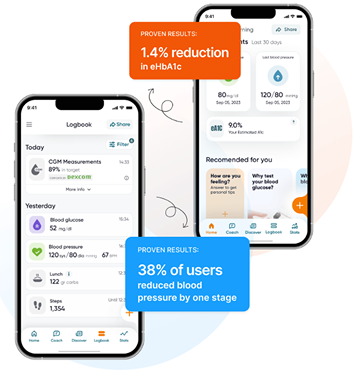
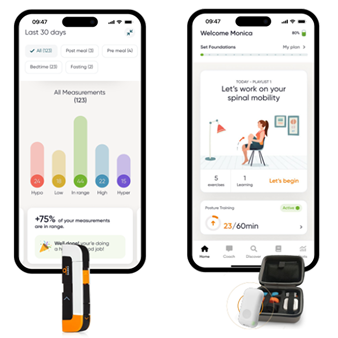
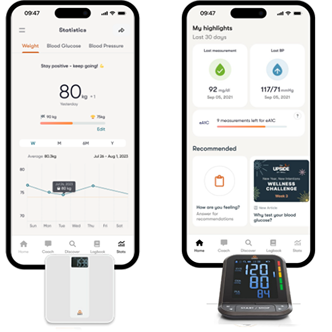
Fully functional web, iOS, and Android apps enabling users to monitor blood glucose levels using a connected dongle device.

Medical Device Integration Layer

Stable connection and data synchronization between the dongle (via lightning/headphone jack) and the app for accurate glucose measurement.

Healthcare Diary

Clear and accessible logging of glucose readings, activities, and related health information for daily tracking.
Deep Link Support

Implementation of deep linking to enable navigation and integration from external sources or notifications.

Remote Actions and Notifications

Features enabling push notifications and remote commands to improve user engagement and data monitoring.

Secure Data Ecosystem

FDA, GDPR- and HIPAA-compliant infrastructure with advanced data encryption and access control.
Business impact

  • Accelerated product roadmap delivery with a fully autonomous team.
  • Reduced overhead and streamlined communication through a single point of contact.
  • Scalable resourcing adapted to product evolution and user growth.
  • Strengthened compliance, performance, and user engagement across platforms.
Dario health now

  • The company is publicly listed on the Nasdaq Capital Market.
  • Over $27.0 million in company revenue in 2024.
  • Approximately 1.3 million registered end-users and 90+ B2B customers.
  • Massive data-driven platform with over 13 billion real-world data points.
Specialists worked on the project

Technologies applied

Technologies & Tools
  • Web Technologies: React.js, Node.js, Express.js
  • Mobile Technologies: Swift Ul, Jetpack Compose
  • APIs: RESTful APls, Graph@L
  • Cloud Services: AWS
  • Version Control: Git
  • Automation Testing Frameworks: Selenium, Appium, XCTest, Espresso
Programming Languages
  • Web Development: Javascript, TypeScript, Python, Java, PHP
  • Mobile Development: Swift, Kotlin
Automation Testing

Selenium, Appium, XCTest, Espresso

CI/CD

Jenkins, GitHub Actions, CircleCl

Data Management
  • Databases: PostgreSQL, MysQL, MongoDB
  • Database Management Systems: Amazon RDS, Firebase
  • Data Integration: Apache Kafka, Apache Spark
  • Data Storage: Amazon S3

How We Helped Create a Personalized AI-powered Health Optimization Platform

Introduction

About the product

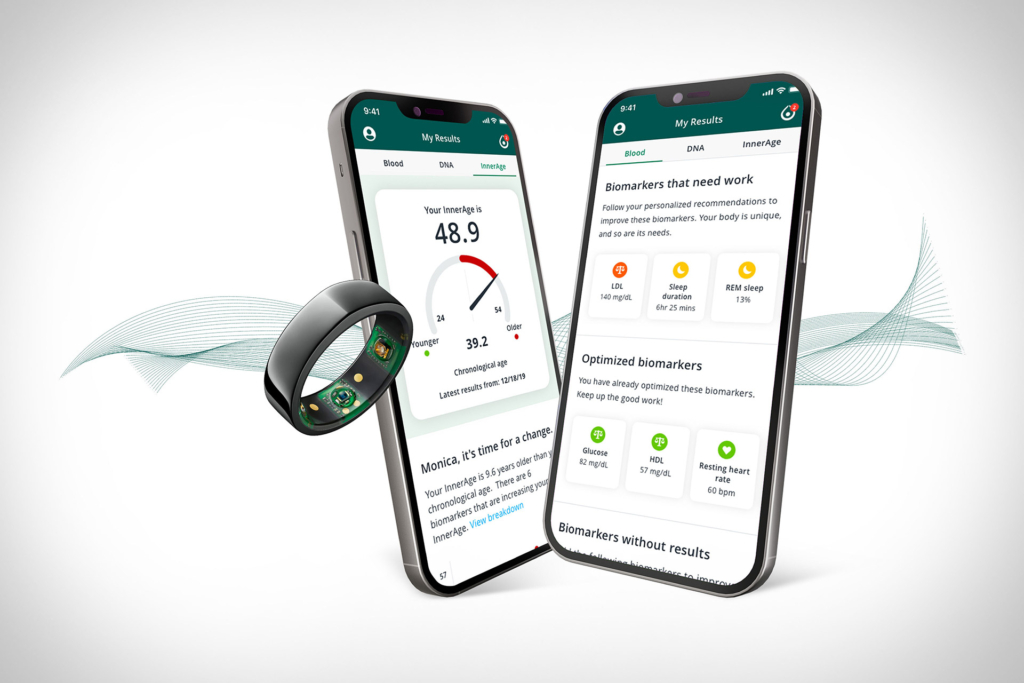
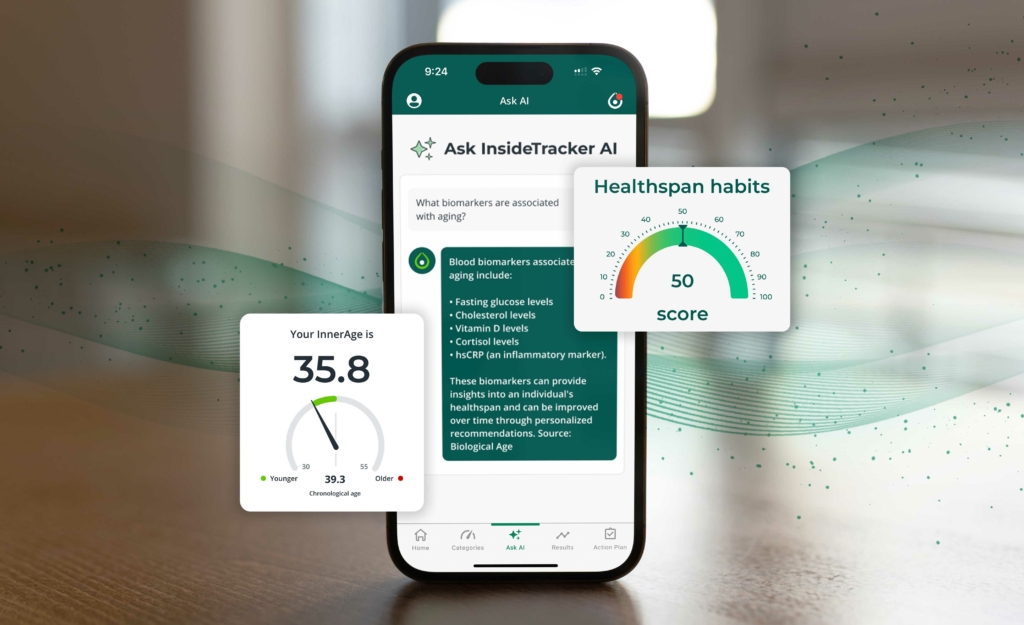
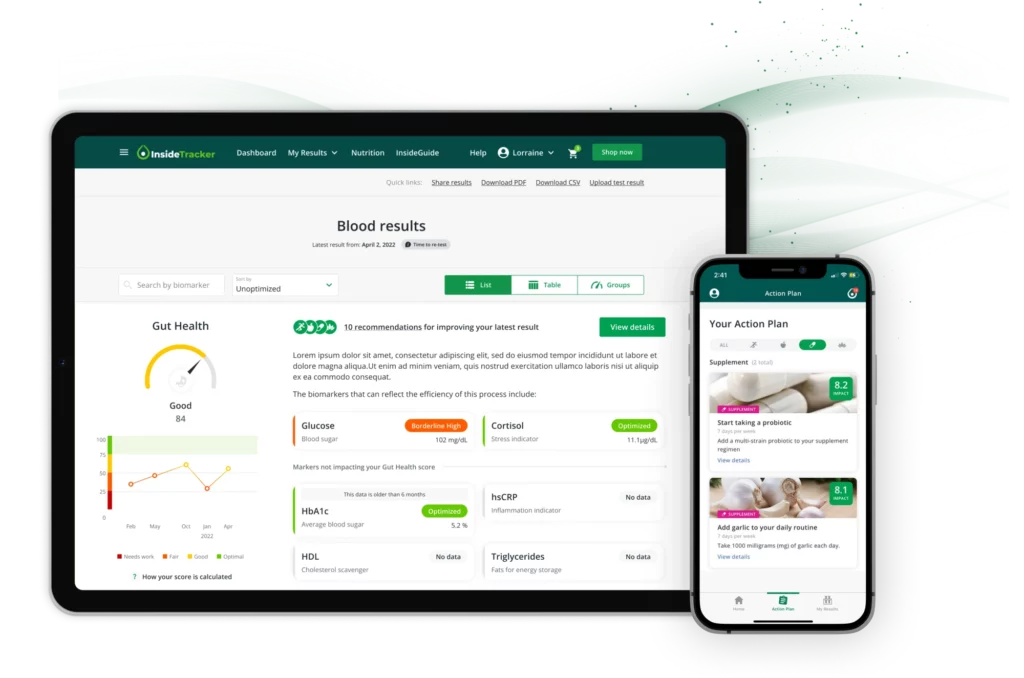
InsideTracker is a system that provides a personal health analysis and data-driven wellness guide by integrating user health data from blood tests, DNA, and fitness trackers. Based on that data, the app would generate personalized plans for nutrition, workouts, and lifestyle improvements.

Client’s objectives

The client came to us with an existing minimal viable product that needed a serious upgrade. The crucial objectives were:Scaling both web and mobile platforms and making them smarter, more connected, and more user-friendly.Bringing together data from blood tests, DNA results, and fitness trackers, giving users a full picture of their health in one place.Creating a foundation for flexible and forward-looking growth with regular feature updates and support for new data sources.We talked about making the experience more engaging—encouraging users to log daily habits, track progress with visual feedback, and get real-time updates on their wellness score and critical health metrics.

Technical challenges

Data Management: Data Integration

Integrating data from multiple sources. The data comes in various formats and must be harmonized to provide a coherent analysis.

Data Management: Scalability

Managing and processing large volumes of data efficiently is critical. The system must be capable of scaling to handle increasing amounts of data as more users join the platform.

Data Security and Privacy

Protecting sensitive health data is paramount. Ensuring compliance with regulations like GDPR and HIPAA adds complexity to data management and requires robust security measures.

AI Development

Ensuring that AI algorithms provide accurate and reliable health recommendations based on diverse data inputs (blood tests, DNA, fitness trackers) is crucial. The AI must be trained on extensive, high-quality datasets to avoid errors and biases.

User Experience

Designing an intuitive and user-friendly interface that effectively communicates complex health data and recommendations is challenging. The app must be accessible and easy to navigate for users of all ages and technical abilities.

Delivery approach

1. Business Analysis

Researching target users, especially those seeking personalized health insights. Defined key features like biomarker analysis, DNA integration, fitness tracking, and personalized recommendations. Determined non-functional requirements.

2. Feasibility Testing

Building and testing early versions to validate core features across platforms and gather feedback for improvements. Continuously updating, fixing issues, and integrating new health data sources.

3. Solution Architecture

Designing the overall architecture, including microservices, serverless components, and data flow. Choosing appropriate technologies and tools for front-end, back-end, and data management.

4. Environment Setup

Setting up IDEs, version control systems, and CI/CD pipelines. Establishing environments for automated and manual testing to ensure quality.

5. Core Modules Implementation

Developing modules for biomarker analysis, DNA data integration, and fitness tracker synchronization. Implementing recommendation systems and creating dashboards for health metrics and real-time updates.

6. Application Development

Developed responsive web apps and native mobile apps. Built RESTful and GraphQL APIs, managed relational/NoSQL databases, and integrated AI algorithms for data analysis and insights. Ensured high functional, quality, and performance testing across platforms.

7. Data Processing and AI Integration

Implementing data processing pipelines using Apache Spark and Pandas for managing health data. Integrating ML models for personalized recommendations and predictive analytics.

8. Deployment

Deploying the applications to production environments and publishing them on Google Play and the App Store. Providing ongoing maintenance and feature updates.

Deliverables

Cross-platform Apps

Fully functional web, iOS, and Android apps with real-time health tracking and integration with devices like Apple Watch and Fitbit.

AI-Powered Personalization

Seamless implementation of ML models for dynamic wellness recommendations.

Secure Data Ecosystem

GDPR- and HIPAA-compliant infrastructure with advanced data encryption and access control.

Scalable Architecture

Microservices and serverless design supporting future feature expansion.

Business impact

  • Accelerated product roadmap delivery with a fully autonomous team.
  • Reduced cost for product development process.
  • Scalable resourcing adapted to product evolution and user growth.
  • Strengthened compliance, performance, and user engagement across platforms.

InsideTracker now

  • Product trusted by over 100,000 users
  • 10 bil+ data points collected
  • Business engaged 15M+ investments
  • 75% of customers improve a healthspan category score, indicating progress to overall health

Specialists worked on the project

Technologies applied

Technologies & Tools
  • APIs: RESTful APIs, GraphQL
  • Cloud Services: AWS, GCP
  • Version Control: Git, GitHub, GitLab
  • Automation Testing Frameworks: Selenium, Appium, XCTest (iOS), Espresso (Android)
Programming Languages
  • Web Development: JavaScript, TypeScript, HTML, CSS, Python, Java
  • Mobile Development: Swift, Kotlin
Libraries
  • Web Libraries: Redux, Axios, D3.js, Material-UI Mobile
  • Libraries: Alamofire, Retrofit, Room
  • Data Visualization: Chart.js, Highcharts, Formik, Yup, React Query, Recharts, Styled Components
Testing

Jest, Mocha, XCTest, Espresso, TensorFlow, Scikit-learn, PyTorch

Data Management
  • Databases: PostgreSQL, MySQL, MongoDB
  • Database Management Systems: Amazon RDS, Firebase
  • Data Integration: Apache Kafka, Apache Spark
  • Data Storage: Amazon S3, Google Cloud Storage